Learning to Walk Together
How loose-leash walking can become a conversation between you and your dog
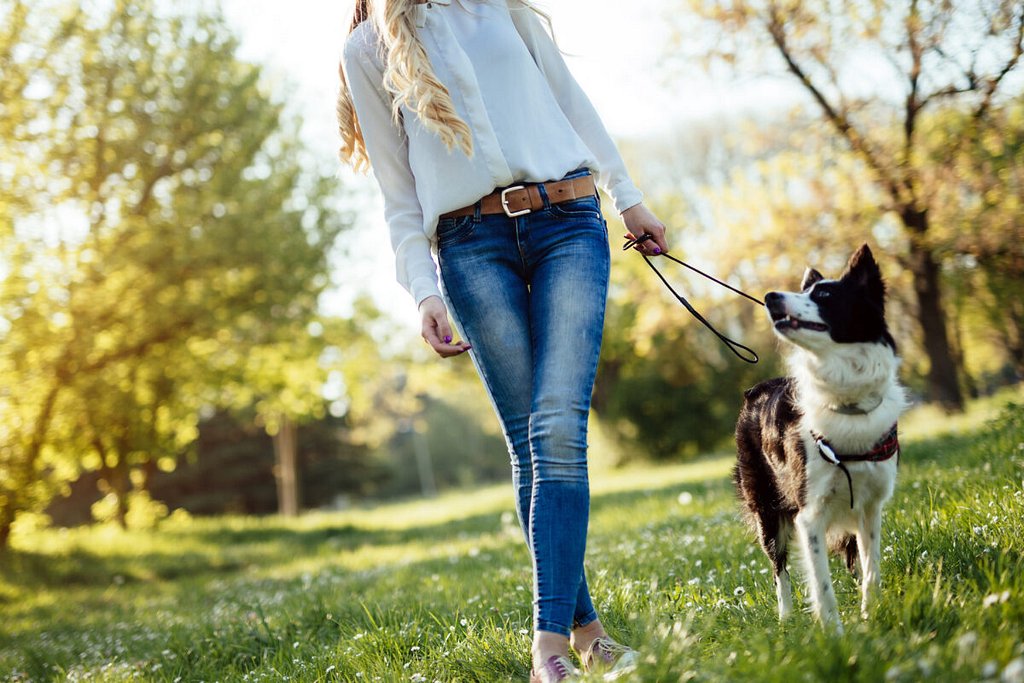
Does your daily walk feel more like a game of tug-of-war than a relaxing adventure?
Leash pulling is one of the most common challenges pet parents face. But teaching loose-leash walking isn't really about teaching your dog to simply stop pulling. It's about helping your dog learn how to move through the world with you.
A good walk is a conversation between you and your dog. Your dog gets to explore, sniff, and enjoy their surroundings, while you learn to communicate with each other and work as a team.
With patience, consistency, and rewards that actually matter to your dog, walks can become something you both look forward to.
🐾 Why Do Dogs Pull on the Leash?
Dogs aren't pulling because they're trying to be difficult. They're naturally curious animals who experience the world through their senses.
There are smells to investigate, people and dogs to greet, interesting sounds, and exciting places to explore. When something interesting is ahead, your dog may simply be thinking:
"I want to go see that!"
Instead of viewing pulling as something your dog is doing to you, try looking at it as communication. Your dog is telling you that something in their environment is valuable or exciting to them.
That's where teamwork comes in.
🐶 Start With Connection, Not Perfection
Before worrying about whether your dog is walking perfectly beside you, focus on building a relationship where your dog wants to pay attention to you.
Practice checking in with each other in calm environments. Reward your dog when they choose to look at you, follow you, or stay connected to you without being asked.
Your goal isn't to make yourself more interesting than everything in the environment.
It's to teach your dog:
"Good things happen when I pay attention to my person."
That connection becomes incredibly valuable once you start adding distractions.
🎁 What Does Your Dog Consider a Reward?
One of the biggest mistakes we can make in training is assuming every dog is motivated by the same thing.
Food is a fantastic reward for many dogs, but it isn't the only option.
Your dog's rewards might include:
- 🦴 Treats or food
- 🧸 A favorite toy
- ❤️ Praise, affection, or attention
- 🎾 A quick game of tug or fetch
- 👃 Getting to sniff something interesting
- 🌳 Moving toward something they want to explore
- 🚶 Continuing the walk
- 🐕 Greeting another dog or person when appropriate
The best reward is the one your dog actually values in that moment.
For example, if your dog desperately wants to sniff a tree, being allowed to go sniff that tree can be a much more meaningful reward than a treat.
This is where learning about your individual dog makes training so much more effective.
🚶 Teach Your Dog That a Loose Leash Keeps the Walk Going
Instead of constantly correcting your dog for pulling, teach them what you do want.
When your dog walks with a loose leash, keep moving and let them enjoy the walk.
When the leash becomes tight, you can pause, change direction, or calmly redirect your dog back toward you.
Once they reconnect with you and the leash becomes loose again, the walk continues.
Over time, your dog can begin to understand:
Loose leash = we keep moving and good things happen.
The goal isn't to stop your dog from exploring.
It's to help them learn that exploring and staying connected to you can happen at the same time.
🔄 Use Redirection Instead of a Constant Tug-of-War
If your dog sees something exciting and immediately pulls toward it, try not to turn the moment into a battle.
Instead, create some distance, get their attention, and redirect them toward you.
When they choose to reconnect, reward that choice.
The more often your dog experiences "I can check in with my person and still get to experience the things I like," the more naturally they will begin to work with you.
🧩 Make Training Fun
Walking practice doesn't have to mean marching down the sidewalk repeating commands.
You can turn your walk into little games that encourage your dog to pay attention to you.
Figure Eights
Walk around trees, poles, or other safe objects in a figure-eight pattern. This encourages your dog to follow your movement and pay attention to where you're going.
Changes of Direction
Every once in a while, change direction. Reward your dog when they notice and follow you.
Speed Changes
Try walking a little faster, slowing down, or stopping. Make it fun and reward your dog for staying connected to you.
Check-Ins
Whenever your dog naturally looks toward you or comes back to your side, acknowledge it. You don't always need to ask for their attention — sometimes the best training moments are the ones your dog offers you on their own.
🌎 Slowly Add Distractions
A dog who walks beautifully in your quiet neighborhood may completely forget their skills when they see another dog, a squirrel, or an exciting new place.
That's normal.
Training needs to grow alongside your dog's ability to handle distractions.
Start somewhere your dog can succeed, then gradually introduce more exciting environments.
If your dog becomes overwhelmed, that's information — not failure.
Take a step back, create some distance, and make it easier again.
❤️ Common Mistakes to Avoid
Expecting perfection
Your dog is going to pull sometimes. They're going to get distracted. They're going to have exciting days and difficult days.
Training isn't a straight line.
Only rewarding with food
Food can be wonderful, but remember that your dog's environment is full of rewards too.
Sometimes the best reward is simply getting to sniff that interesting spot.
Being inconsistent
If pulling sometimes gets your dog where they want to go and other times doesn't, the behavior can become even stronger.
Try to be as consistent as possible with the rules you've established.
Making every walk a training session
Your dog needs walks where they can simply be a dog.
Let them sniff. Explore. Wander. Enjoy themselves.
Not every walk needs to be structured training.
Focusing only on the leash
The leash is only one small part of the picture.
The bigger goal is communication between you and your dog.
🐾 Remember: You're a Team
Loose-leash walking isn't about creating a dog who never pulls.
It's about teaching your dog that they can explore the world and stay connected to you while doing it.
The more you understand what motivates your dog, the more opportunities you have to communicate with them in a way they understand.
And the more you practice working together, the more natural that communication becomes.
The goal isn't a perfectly behaved dog who never pulls.
The goal is a dog who learns:
"I can explore the world, and I can do it with my person."
And that's when a walk becomes more than just exercise.
It becomes something you do together.