A Dog Ready for the Journey
Preparing your dog for the journey before you ever need to take it.
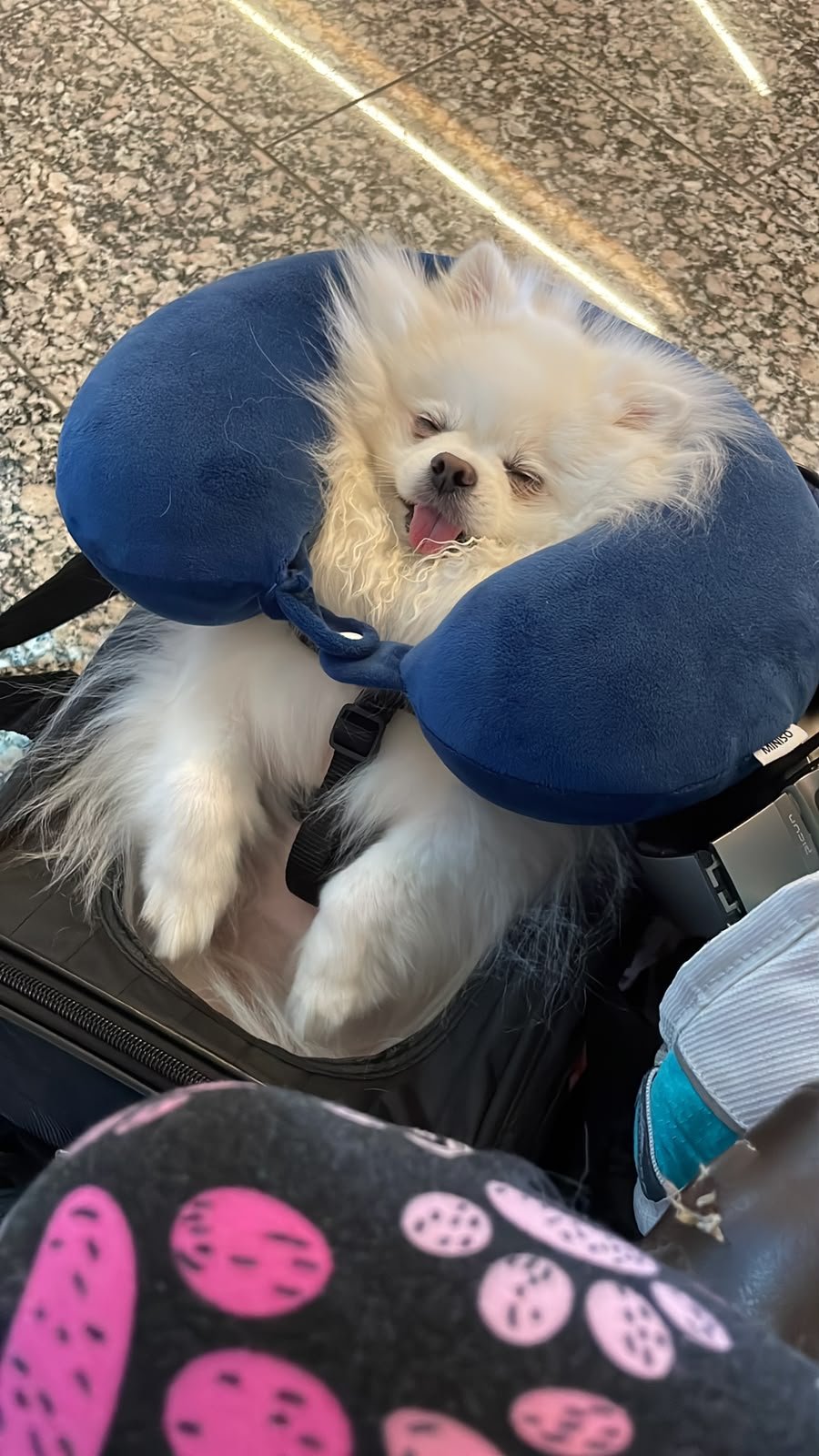
I rescued both of my dogs as puppies while living in China. I knew we might leave one day, so I started preparing them long before we ever had a departure date.
Months before we left China, I worked on making their carriers a normal and comfortable part of their lives. I also kept up with their everyday training and made sure they were prepared for the kinds of situations they might encounter while traveling.
When the time finally came to leave China, their first flight ever was over 10 hours long.
And they did amazing.
After moving back to Canada, we eventually made another big move, this time to Albania. Once again, they had to adjust to a completely new environment and a new routine.
Watching them handle these major changes so well reinforced something I had already believed:
Preparation matters.
You don't want to wait until you're standing in an airport with your dog to discover that they're uncomfortable in their carrier, overwhelmed by unfamiliar surroundings, or unsure how to settle in a completely new environment.
The best time to prepare your dog for travel is before you know you need to.
Don't Wait Until You Have a Ticket
One of the biggest mistakes we can make is waiting until travel is already happening to start preparing our dogs.
If your dog has never been comfortable in a carrier, the airport is not the place to introduce one.
If your dog struggles with unfamiliar environments, a long journey is probably not the best time to discover that.
And if your dog only practices their training at home, suddenly expecting them to respond in a completely unfamiliar environment can be a lot to ask.
Travel can involve new people, new places, unfamiliar sounds, strange smells, different routines, and long periods of waiting.
Preparing for those things takes time.
Make the Carrier Part of Everyday Life
For dogs who will be traveling in a carrier, the carrier shouldn't only come out when it's time to leave.
That can quickly teach your dog that the carrier means something unusual or stressful is about to happen.
Instead, I wanted my dogs to see their carriers as something familiar.
I gave them opportunities to spend time around them and gradually become comfortable going inside. The goal wasn't simply to get them to tolerate being confined.
I wanted the carrier to become a normal part of their environment.
Depending on your dog, that process might involve treats, toys, meals, praise, quiet time, or simply allowing them to explore the carrier at their own pace.
The important part is giving them time to build that familiarity before travel day.
Training Doesn't Stop Because You're Traveling
Travel is one of those situations where your dog's everyday skills can become especially valuable.
Before our moves, I made sure to revisit the training my dogs already knew rather than assuming that because they had learned it once, they would automatically respond everywhere.
Their name.
Basic obedience.
Leash manners.
Coming when called.
Settling down.
Being comfortable around unfamiliar situations.
These skills weren't about making them perfectly obedient.
They were about giving them tools they could use when their environment suddenly became very different.
Practice in Different Places
Dogs don't automatically understand that a behavior they learned in your living room applies everywhere.
That's why practicing in different environments can be so helpful.
A sit at home is one thing.
A sit somewhere unfamiliar, surrounded by new sights, sounds, and smells, is another.
Gradually exposing your dog to different environments gives them opportunities to practice listening and settling while the world around them changes.
You can start small.
A different room.
A new neighborhood.
A quiet outdoor area.
A pet-friendly store.
A car ride.
A new place to settle.
The goal isn't to overwhelm your dog with everything at once. It's to help them become comfortable learning and functioning in different environments.
Think About What Your Dog Might Experience
Before traveling, think beyond the actual transportation.
What might your dog encounter?
Will unfamiliar people need to handle them?
Will they need to spend time in a carrier?
Will there be long periods of waiting?
Will they encounter crowds or loud noises?
Will they be staying somewhere unfamiliar?
Will their normal walking, feeding, and sleeping routine change?
Thinking about these things ahead of time allows you to identify skills you can work on before the trip.
You don't have to recreate the entire journey.
You simply want to give your dog experience with some of the individual pieces.
Keep Your Dog's Individual Needs in Mind
Not every dog will prepare for travel in exactly the same way.
Some dogs are naturally comfortable with new experiences.
Others need more time.
Some dogs love their carriers.
Others need a slower introduction.
Some dogs can settle almost anywhere.
Others need more support to feel comfortable in a new environment.
This is where knowing your dog matters.
Training isn't about checking every box because a list says you should.
It's about looking at the individual dog in front of you and asking:
"What skills will help this dog feel more comfortable and capable during this experience?"
Preparation Is About More Than Travel
One of the things I love most about preparing a dog for travel is that the skills you teach don't only help on travel day.
A dog who is comfortable in a carrier may have an easier time going to the vet.
A dog who can settle in unfamiliar places may find new environments less overwhelming.
A dog who can respond to their person around distractions has a useful skill in everyday life.
A dog who has learned that new experiences don't always have to be scary may become more adaptable over time.
You're not just preparing for a plane ride.
You're preparing your dog for life.
Start Before You Need It
My dogs have now traveled internationally more than once, and each journey has been a reminder of why I started preparing them when they were puppies.
I couldn't predict every situation they would encounter.
I couldn't make the journey completely familiar.
But I could give them skills, experiences, and confidence to draw from when things around them changed.
That's what I would encourage other pet parents to do.
If you think you might travel with your dog someday, you don't have to wait until you have a destination, a flight, or a departure date.
Start now.
Build the skills gradually.
Make new experiences part of normal life.
And give your dog the chance to become a little more prepared for whatever adventure comes next.
Because you never know where life might take you.
But with a little preparation, your pup can be ready to go there with you.