The Other Half of Dog Training
Because training doesn't stop when the trainer leaves
When people think about dog training, they usually picture the dog learning something new.
Sit. Stay. Come. Walk nicely. Leave it.
But there is another part of training that is just as important: the person holding the leash.
A dog can learn a behavior during a training session, but if their person doesn't understand how, when, or why to use that behavior, it can be difficult to maintain outside of that session.
That's why I don't just teach dogs.
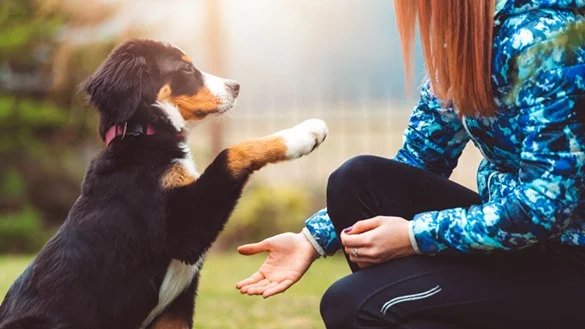
I teach the dog AND the human.
Your Dog Is Learning From You All the Time
Dogs are constantly paying attention to what happens around them.
They learn from our words, our body language, our timing, our reactions, and even the routines we create without realizing it.
If a dog pulls toward something and eventually gets to go investigate, they may learn that pulling can get them where they want to go.
If jumping gets them attention, jumping may become a very rewarding behavior.
If barking consistently makes something exciting happen, barking can become part of their strategy.
This isn't your dog trying to manipulate you.
They're learning from what works.
And that means we have an opportunity to change the lesson.
Timing Matters
One of the most important things I teach pet parents is timing.
Dogs don't understand our explanations the way people do. They learn from what happens immediately around their behavior.
If your dog sits and you reward them several seconds later while they're already standing again, they may not understand exactly what earned that reward.
The same goes for unwanted behaviors.
Understanding timing helps us communicate much more clearly with our dogs.
Sometimes a small change in when we respond can make a surprisingly big difference.
Consistency Doesn't Mean Doing Everything Exactly the Same
Consistency is important, but consistency doesn't mean that every situation needs to look identical.
Your dog may need different expectations at home than they do at the park.
You may use different rewards depending on what your dog finds motivating in that moment.
You may need to adjust your approach depending on your dog's age, energy, confidence, environment, or experience.
Good training isn't about following a rigid formula.
It's about understanding the principles behind what you're doing and knowing how to apply them to the situation in front of you.
We Have to Understand the Dog in Front of Us
Every dog is different.
Some dogs are highly motivated by food. Others would rather chase a toy, explore a new smell, receive attention, or simply have access to something they want.
Some dogs are confident in new environments.
Others need more time.
Some dogs love their crate and settle easily. Others need to be gradually taught that their crate is a safe and comfortable place.
This is why I don't believe there is one training method that should be applied identically to every dog.
Positive reinforcement is an important part of my approach, but training is about more than one technique.
It's about understanding the individual dog and choosing appropriate tools and strategies that help that dog and their family succeed.
Your Dog Is Communicating With You
One of the most valuable things a pet parent can learn is how to pay attention to what their dog is communicating.
Is your dog getting overwhelmed?
Are they too distracted to respond?
Are they unsure about something?
Are they excited?
Are they tired?
Are they telling you they need more space?
When we start paying attention to these details, training becomes less about simply getting a behavior and more about understanding what is happening underneath it.
And that understanding can change the way we respond.
The Goal Isn't to Depend on the Trainer
A trainer can show you what to do.
But the real goal is for you to eventually understand what to do when the trainer isn't there.
That's why I want pet parents to understand the reasoning behind training, not just memorize a list of instructions.
I don't want you thinking:
"My trainer told me to do this, so I guess I'll do it."
I want you thinking:
"I understand why we're doing this, and I can recognize when my dog needs me to adjust."
That knowledge is what allows training to continue in everyday life.
Training Happens Everywhere
The best training opportunities aren't always formal training sessions.
They're the moments when your dog is waiting at the door.
Walking past another dog.
Settling while you work.
Meeting someone new.
Getting ready for a walk.
Choosing whether to come when called.
Learning how to relax.
Living alongside you.
These everyday moments are where the relationship between you and your dog develops.
And the more you understand how your dog learns, the more opportunities you have to help them succeed.
We're Building a Relationship
At the end of the day, dog training isn't just about creating a dog who responds to commands.
It's about creating communication between two different species who are sharing a life together.
Your dog is learning about you.
You're learning about them.
You're both figuring out what works, what doesn't, and how to communicate more clearly.
That's why I teach the dog AND the human.
Because when the human understands the dog, and the dog understands what the human is asking, training becomes more than a list of behaviors.
It becomes a conversation.